

Your summer shower routine: what to change (and why it matters)
Every summer we update our wardrobes, eating habits and sleep schedule. But almost no one thinks to update their summer shower routine — and that's a mistake. In summer, skin faces completely different challenges than in winter. A routine designed for cold months isn't built for heat.
What actually changes in your skin during summer
In warmer months, skin produces more sebum (the body's natural response to heat), loses water faster through sweat, and accumulates layers of sunscreen residue, sea salt and pool chlorine. These combine to disrupt your skin's natural pH and compromise its protective barrier.
One fact that's often overlooked: heat accelerates bacterial growth on the skin. The summer shower isn't just about hygiene — it's active prevention.
The most common summer shower mistakes
Water too hot. Even in summer, most people shower hot. That's counterproductive: hot water dilates pores, strips away the skin's natural lipid film, and accelerates moisture loss that sun exposure has already started.
Synthetic fragrances. Artificial perfumes irritate skin that's already been sensitised by UV. Products with simple, natural ingredients are a better fit for the season.
Scrubbing too hard. Sun-exposed skin is more fragile. Aggressive movements irritate it and speed up the peeling of your tan. Use circular motions — ideally with a silicone dispenser that stimulates circulation without abrasion.
Skipping moisturiser after. Post-shower hydration matters even more in summer. Skin absorbs significantly better when it's still slightly damp.
What to look for (and avoid) in summer shower products
Ingredients worth seeking out
- Aloe vera: soothing and hydrating, ideal for sun-exposed skin
- Natural glycerin: retains moisture without heaviness
- Light vegetable oils (olive, sunflower, sweet almond): nourish without clogging pores
- Botanical extracts with antioxidant properties
Ingredients worth avoiding
- SLS and SLES (sodium lauryl/laureth sulphate): strip the skin's protective film
- Parabens: preservatives that disrupt the skin microbiome
- Occlusive silicones: counterproductive in heat
- High concentrations of synthetic fragrance: irritating on UV-sensitised skin
Cold process soaps retain intact natural glycerin — the ingredient that genuinely hydrates, not the one you hear about in product marketing.
The ideal summer shower routine: step by step
- Warm water, not hot. Around 35–36°C. Finish with a cool rinse.
- Circular motions with a silicone dispenser. Stimulates microcirculation, gently removes dead cells, distributes soap evenly. No synthetic sponges — they accumulate bacteria quickly.
- Rinse thoroughly. Soap residue sitting on skin irritates throughout the day.
- Pat dry, don't rub. Especially on tanned areas.
- Moisturise immediately. Slightly damp skin absorbs up to 40% more than dry skin.
Less plastic, same results
The average person who uses liquid shower gel produces 4–6 empty plastic containers every summer. Despite recycling efforts, a large proportion of these containers don't actually get recycled.
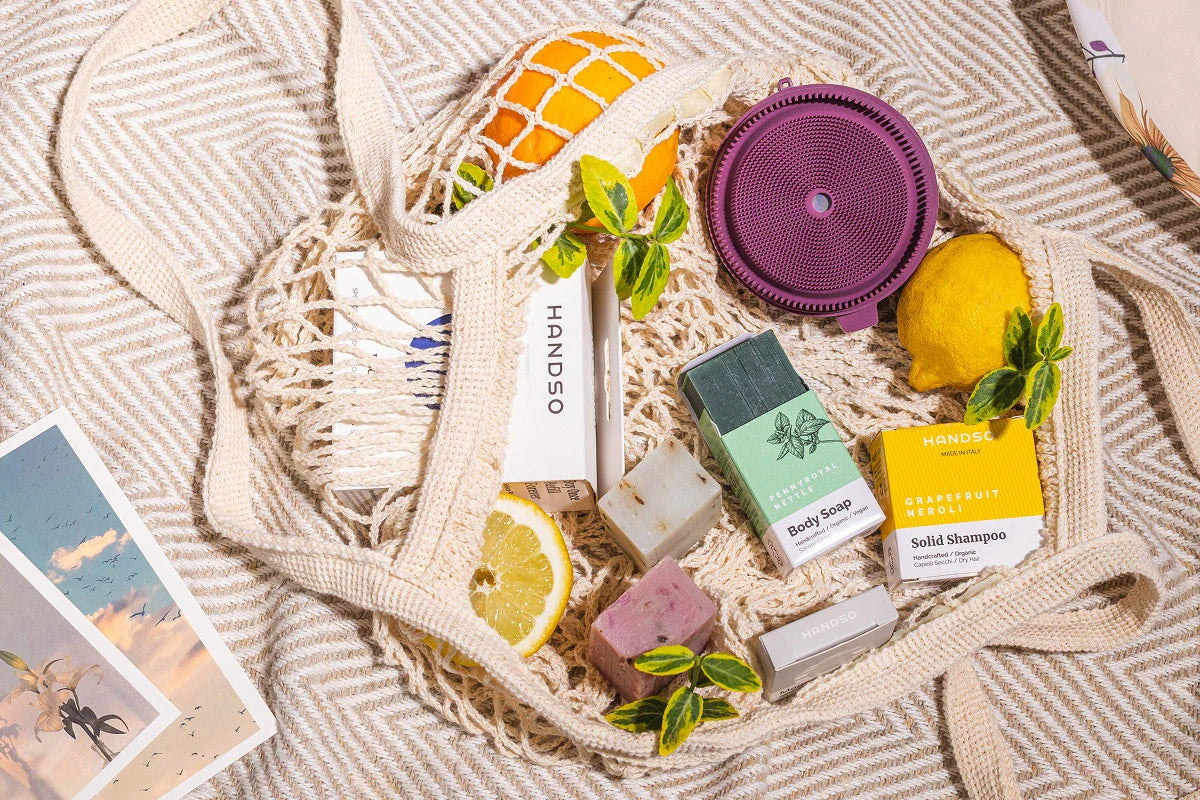
Handso Body Soaps have no packaging, are made with ingredients you can actually read, and last as long as — or longer than — a standard bottle.
The Handso Body Cleanser in medical-grade silicone lathers any solid soap, stimulates circulation with soft bristles, and stays hygienic between uses — silicone doesn't harbour bacteria the way traditional sponges do.
The bottom line
Summer is the ideal time to simplify. Fewer products, fewer unnecessary ingredients, less plastic. Not a compromise — a better choice. Your skin benefits, and so does the environment.
Published for World Environment Day — 5 June.


