

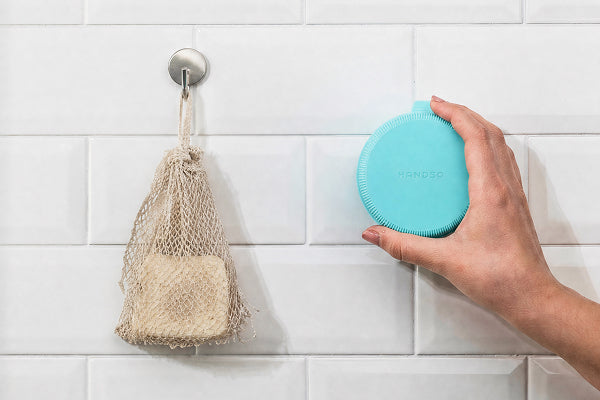
Solid soap holder: how to make your soap last
A bar of soap only saves you money if it lasts — and if it sits in a puddle of water, it melts fast. The right soap holder is the difference between a bar that lasts for weeks and one that's gone in days.
Why soap turns to mush
Soap wears down less from use than from staying wet. Left in a pool of water or a closed dish with no drainage, the surface softens, turns slimy and dissolves between washes. The real enemy isn't use — it's standing water.
What makes a good soap holder
- Drainage: water must run off, not pool. Look for holes, slots or a sloped base.
- Airflow: the bar needs to dry between uses — holders that lift it and expose several sides are best.
- Material: easy to clean, doesn't trap moisture or slime.
- Stability: keeps the bar from sliding onto the shower floor.
In short, a good holder does one thing well: it keeps the soap dry.
Types of soap holder
- Classic shower/sink dish: cheap, but many drain poorly and leave the bar soaking.
- Magnetic (no drilling): the bar hangs from a magnet and dries on every side. Excellent drainage; you insert a small metal disc into the soap.
- With built-in sponge or dispenser: the bar sits in a holder that also helps you apply and lather while keeping it protected and drained.
How to make a bar last longer
- Keep it away from the direct spray.
- Let it dry fully between uses.
- Use a holder that drains and ventilates, not a flat dish.
- Use one bar at a time; keep the rest dry.
- Cut large bars in half and use one piece at a time.
An all-in-one solution
The simplest fix is a system that holds, drains and applies in one object — the idea behind Handso: the bar sits in a holder that protects it, lets it dry and doubles as a lathering tool, so it lasts longer and never ends up melting on the shower floor.


