

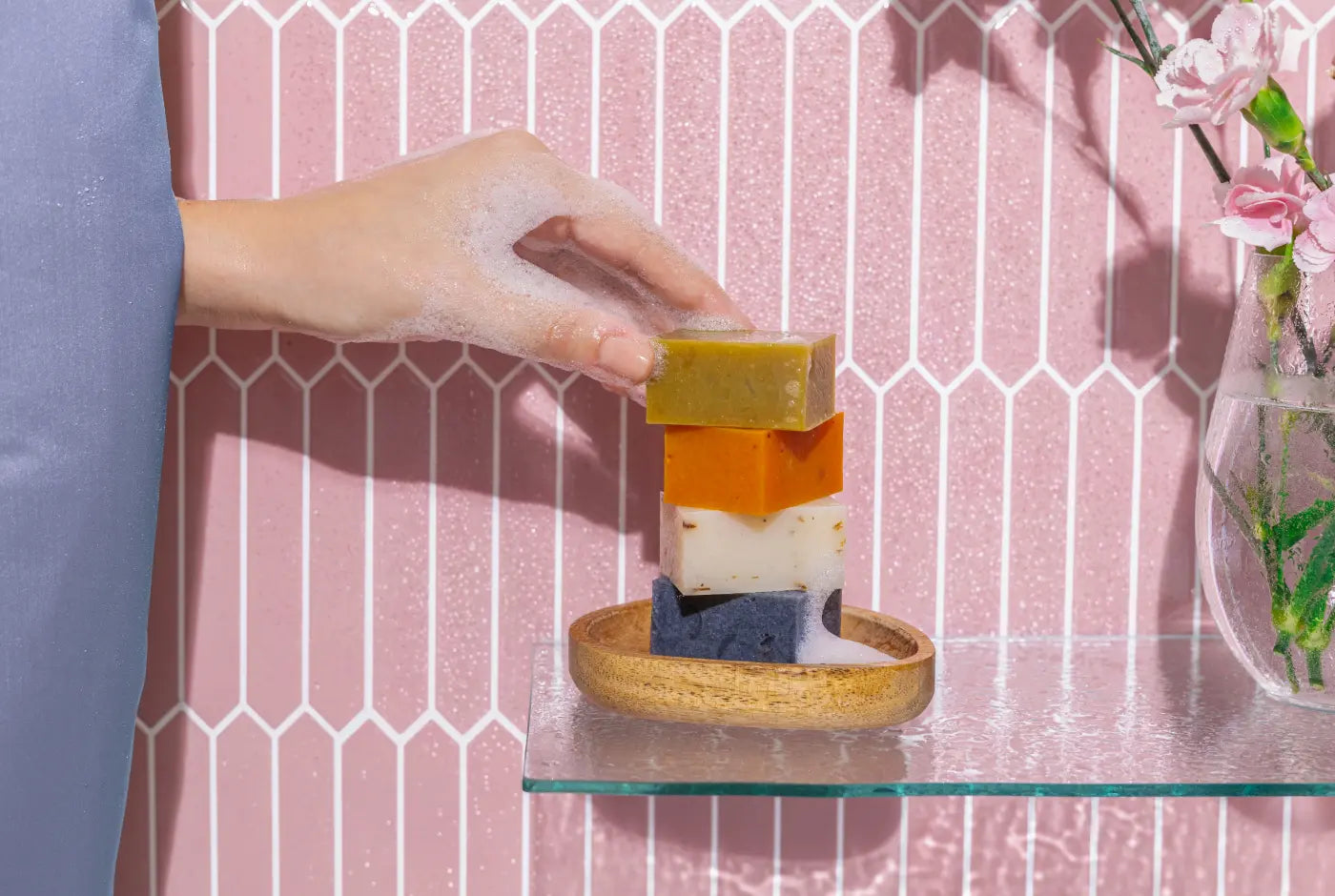
Does your skin feel tight and dry after a shower? You might blame the weather or your moisturizer. But the problem could be hiding in plain sight: your soap. Many commercial bars strip your skin of its natural oils, leaving it feeling irritated.
There’s a better way to get clean. Cold process soap is a simple, traditional alternative that works with your skin, not against it. It cleanses gently while delivering real, nourishing benefits. Let's explore what makes this type of soap a game-changer for your daily routine.
What Is Cold-Process Soap?
Cold-process soap isn't just mixed in a vat. It’s created through a natural transformation. Think of it less like a factory and more like a kitchen, where simple ingredients become something much greater. It’s a slow, deliberate process that makes a world of difference for your skin.
The Saponification Secret: Turning Oils into Soap
At its heart, soapmaking is a simple chemical reaction called saponification. This is where the magic happens. We combine natural plant oils and butters (like olive oil and shea butter) with an alkali solution (sodium hydroxide, or lye).
The ingredients react, completely transforming into soap and glycerin. No lye remains in the final bar. Instead, you get a solid, gentle cleanser created from wholesome ingredients you can actually recognize.
Glycerin: Your Skin's Natural Hydrator
During saponification, a wonderful substance called glycerin is created. Glycerin is a humectant. That means it pulls moisture from the air toward your skin, keeping it hydrated and soft.
In industrial soap manufacturing, this valuable glycerin is often removed and sold separately for other cosmetic products. Cold-process soap, however, retains all of its natural glycerin. This is a key reason why it feels so much better on your skin. You’re getting a cleanser and a moisturizer in one bar.
Lye's Role: A Necessary Ingredient, Not a Leftover
The word "lye" can sound a little scary. It’s a caustic ingredient, and you wouldn't want to handle it without proper safety gear. However, lye is essential for saponification. Without it, oils would just stay oils.
Here’s the key: there is no lye left in the final bar of soap. During the saponification and curing process, the lye is completely consumed and neutralized. It acts as a catalyst, transforming the oils into gentle, cleansing soap. A finished, cured bar is perfectly safe and lye-free.
Why Curing Matters: Better with Time
After the soap is made, it’s not ready to use right away. It needs to cure. For four to six weeks, the bars rest in a cool, dry place. During this time, all the excess water evaporates.
This curing process makes the soap harder, so it lasts much longer in your shower, especially when kept dry with a magnetic wall holder. It also creates a milder, more gentle lather. Patience is part of the recipe, and the result is a superior, longer-lasting bar of soap.

Why Your Skin Loves Cold Process Soap: The Key Benefits
Switching to cold-process soap isn't just about what's in it. It's about what it does for your skin. You can feel the difference from the very first wash. The benefits are simple, direct, and rooted in good science.
Gentle Cleansing That Respects Your Skin Barrier
Your skin has a natural protective layer called the acid mantle, or skin barrier. It keeps moisture in and irritants out. Harsh detergents in many commercial bars can disrupt this barrier, leading to dryness and irritation. Cold-process soaps are different. Studies show that superfatted soaps, a common type of cold-process bar, are significantly less disruptive to the skin’s pH and natural barrier than standard alkaline soaps [1]. They clean effectively without stripping your skin of its essential defenses.
Superfatting sounds technical, but it’s a simple concept. We add a little extra oil to the recipe than is needed for the saponification reaction. This means a portion of the oils remains in its original, unchanged form in the final bar. The cold-process method is particularly good at preserving these unsaponified fatty acids [2]. This "superfat" adds an extra layer of moisture, leaving your skin feeling nourished and conditioned, not dry.
Deep Moisture from Natural Oils
The foundation of cold-process soap is high-quality plant oils and butters. These aren’t just fillers; they are active ingredients. Oils like olive, sweet almond, and shea butter are packed with vitamins, antioxidants, and fatty acids. Research confirms that many plant-based oils can help improve skin barrier function, lock in moisture, and provide anti-inflammatory benefits [3]. Instead of leaving your skin tight, these oils help it feel soft, supple, and comfortable.
Pure and Simple: No Harsh Chemicals or Synthetic Scents
Take a look at the ingredient list on a typical commercial soap bar. You might find a long list of synthetic detergents, preservatives, and artificial fragrances. Cold-process soap is the opposite. The ingredient lists are short and understandable. You’ll see things like "olive oil," "coconut oil," and "shea butter." There are no harsh sulfates, parabens, or synthetic foaming agents. It’s pure, simple cleansing, applicable whether for a traditional body bar or a solid shampoo bar.

Ingredients That Make the Difference
Not all oils are created equal. A great cold-process soap uses a balanced blend of ingredients chosen for their specific skin benefits. Here’s a quick guide to what you should look for and what you should avoid.
Hero Plant Oils: Olive, Coconut, Shea Butter, Sweet Almond
Certain oils are stars in the soapmaking world for good reason.
- Olive Oil: Creates a gentle, conditioning lather. It's incredibly mild and has been used for skincare for thousands of years.
- Coconut Oil: Provides fantastic cleansing power and big, bubbly lather.
- Shea Butter: Adds a creamy, luxurious feel and is known for its deep moisturizing properties.
- Sweet Almond Oil: A light, nourishing oil rich in Vitamin E, perfect for sensitive skin.
Tailored for Every Skin Type: Dry, Oily, Sensitive, Blemish-Prone
The beauty of cold-process soap is that it can be customized.
- For Dry Skin: Look for soaps high in olive oil, shea butter, or avocado oil for extra conditioning.
- For Oily Skin: Soaps with clays like bentonite or French green clay can help absorb excess oil without over-drying.
- For Sensitive Skin: Unscented bars or those with gentle ingredients like oatmeal and almond oil are excellent choices.
- For Blemish-Prone Skin: Tea tree oil and charcoal are known for their purifying properties.
What to Avoid: Hidden “Gotchas” in Industrial Bars
Many commercial bars aren’t technically soap. They are “syndet” bars, short for synthetic detergent. Watch out for these common irritants:
- Sulfates (SLS/SLES): Harsh detergents that create a big lather but can strip the skin barrier.
- Parabens: Synthetic preservatives that can cause skin irritation.
- Phthalates: Often hidden in the generic term "fragrance," these chemicals can be disruptive.
- Triclosan: A synthetic antibacterial agent that is harsh and unnecessary for daily cleaning.

Cold-Process vs Industrial: Key Differences
It's easy to see the difference when you put them side-by-side. One is a carefully crafted skincare product, while the other is a mass-produced detergent.
| Feature | Cold-Process Soap | Industrial "Soap" Bar |
|---|---|---|
| Ingredients | Natural oils, butters, lye | Synthetic detergents, preservatives, fillers |
| Glycerin | Naturally retained for moisture | Often removed and sold separately |
| Skin Impact | Cleanses gently, moisturizes | Can strip natural oils, causing dryness |
| Production | Made in small batches, cured for weeks | Mass-produced quickly in factories |
Sustainability and Transparency
Choosing cold-process soap is often a more sustainable choice. Small-batch makers tend to use responsibly sourced ingredients from transparent suppliers. Packaging is frequently minimal and plastic-free. By supporting these makers, you are choosing a product that is kinder to your skin and the planet. You know exactly what you’re putting on your body because the process is simple and the ingredients are clear.
It’s time to stop accepting “squeaky clean” as the standard. Your skin deserves better. It deserves gentle cleansing, real moisture, and simple, nourishing ingredients, perhaps applied with a Handso Shower Tool for an elevated experience.
Frequently Asked Questions
-
Is lye safe in cold-process soap?
Yes, it is completely safe. While lye is a caustic ingredient required to make soap, it is fully neutralized during the saponification process. There is no lye left in the final, cured bar of soap.
-
Why does cold-process soap cost more than commercial soap?
The price reflects the high-quality ingredients, the time-intensive process, and the small-batch craftsmanship. Each bar cures for 4-6 weeks, and it is made with expensive oils and butters, not cheap detergents.
-
Is cold-process soap better for sensitive skin?
Many people with sensitive skin find great relief with cold-process soap. Because it retains its natural glycerin and is free from harsh synthetic chemicals, it cleanses without stripping the skin's protective barrier, which is key for preventing irritation.
References
- Xin‐Yi Xia, et al.. (2021). Skin biophysical assessments of four types of soaps by forearm in‐use test. Journal of Cosmetic Dermatology. Retrieved from https://doi.org/10.1111/jocd.14589
- Thitiphan Chimsook. (2018). The Effects of Cold Saponification on the Unsaponified Fatty Acid Composition and Sensory Perception of Commercial Natural Herbal Soaps. Molecules. Retrieved from https://www.mdpi.com/1420-3049/23/9/2356
- Ana Beatriz C. S. B. da Silva, et al.. (2024). The benefits and challenges of treating skin with natural oils. International Journal of Cosmetic Science. Retrieved from https://doi.org/10.1111/ics.12960


